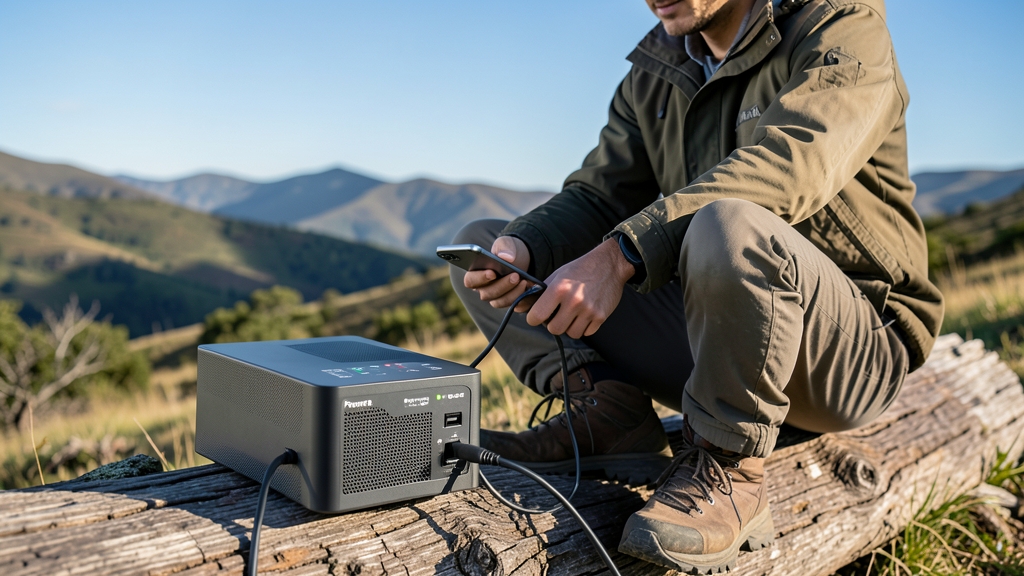
Bottom Line
If you need a portable power station with at least 1 kWh capacity and high continuous output (1.5 kW‑1.8 kW) for running larger appliances or multiple devices, the EF EcoFlow Delta 3 or the Jackery Explorer 1000 v2 are the better fits, provided you value fast multi‑method recharging and a five‑year warranty. If your priority is ultra‑lightweight portability, a smaller footprint, and you can work within a sub‑300 Wh budget for camping or short trips, the Jackery Explorer 300 meets those needs with its 7.5 lb weight, 300 W output, and similar warranty. Choose based on the capacity‑to‑weight ratio and the maximum power draw your typical load requires.
Quick Decision Table
| Documented criterion | Best for | Skip if |
|---|---|---|
| Capacity ≥ 1 kWh | Delta 3 or Explorer 1000 v2 | Explorer 300 (insufficient capacity) |
| Weight ≤ 8 lb for backpacking | Explorer 300 | Delta 3 and Explorer 1000 v2 (weight not disclosed) |
| Need for multiple charging inputs (solar, alternator, generator) | Delta 3 | Explorer 1000 v2 and Explorer 300 (fewer input options) |
What Matters for This Purchase
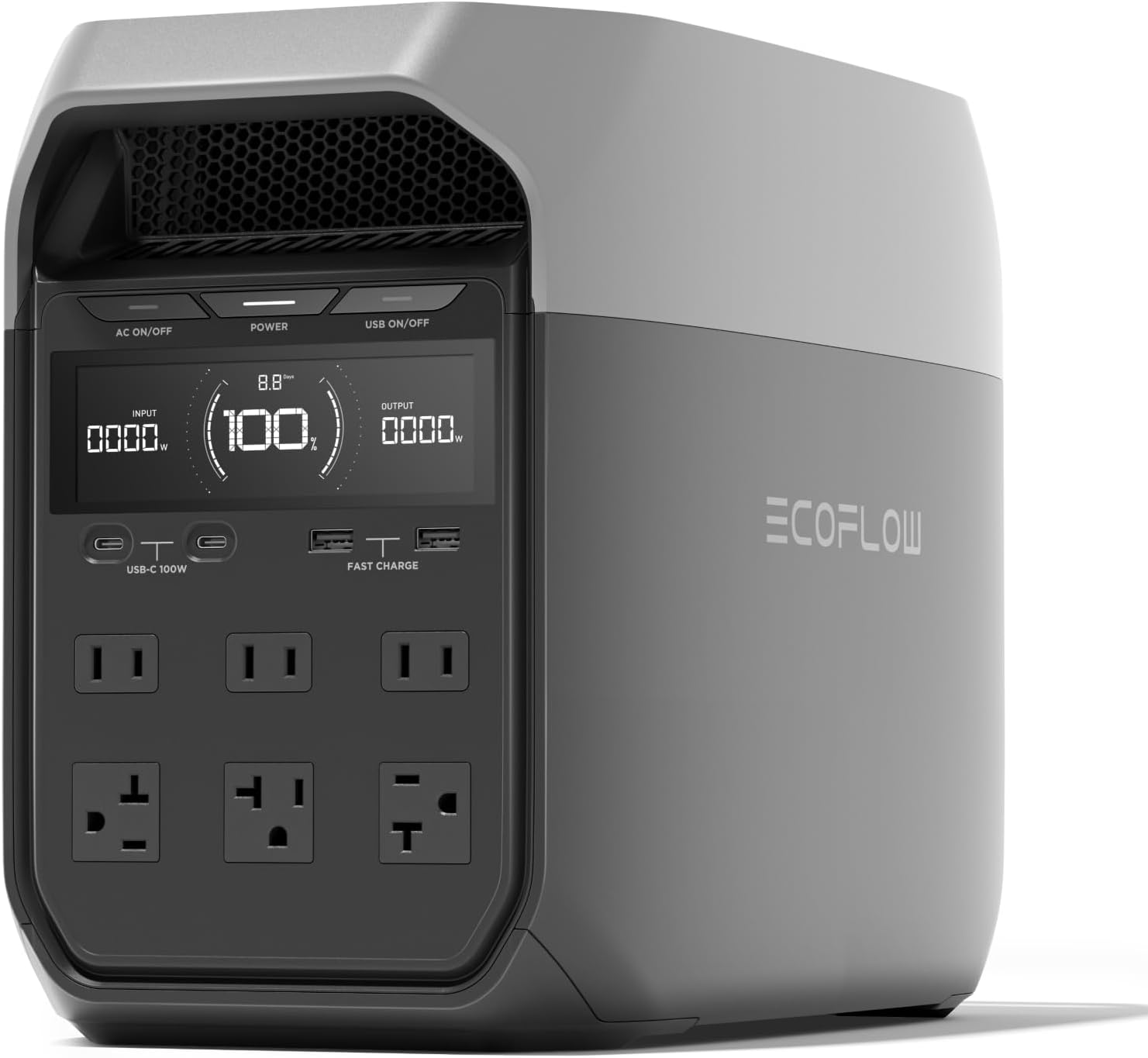
The EF EcoFlow Delta 3 offers a 1024 Wh battery and 1800 W continuous output (3600 W surge) with five fast recharging options, including AC, solar, and alternator inputs, and it can be expanded with extra batteries to reach 2 kWh or more. This makes it suitable for users who anticipate high‑power demands such as power tools, medical equipment, or multiple high‑draw devices, and who may benefit from rapid recharge in varied environments.
The Jackery Explorer 300 provides a 293 Wh capacity, 300 W continuous output, and a weight of 7.5 lb, positioning it for lightweight, short‑duration use cases like camping, hiking, or emergency backup for small electronics. Its fast solar charging (80 % in ~2.8 h with a 100 W panel) and LiFePO₄ chemistry promise long cycle life, appealing to users who prioritize portability over raw power.
Both the Jackery Explorer 1000 v2 and the EF EcoFlow Delta 3 share a 1024 Wh capacity but differ in output—1500 W versus 1800 W—and in battery chemistry, with the Explorer 1000 v2 explicitly using LiFePO₄ cells rated for 10+ years. Buyers who value proven long‑term cell durability and a slightly lower output may lean toward the Explorer 1000 v2, while those who need the highest continuous wattage and modular expandability may prefer the Delta 3.
Product Analysis
EF ECOFLOW Delta 3 Portable Power Station
When comparing capacity versus weight, the Explorer 300’s 293 Wh at 7.5 lb yields a capacity‑to‑weight ratio of roughly 39 Wh per pound. The Delta 3 and Explorer 1000 v2 each provide over 1 kWh of capacity, but their exact weights are not disclosed in the official specifications, so a direct ratio comparison cannot be made. Users who must carry the unit over long distances will therefore find the Explorer 300 more practical, while stationary or vehicle‑mounted setups can accommodate the larger units.
Charging flexibility is a key differentiator. The Delta 3 lists five distinct fast‑charging methods, including an 800 W alternator charger and a dual‑fuel generator input, giving it broader off‑grid applicability. The Explorer 1000 v2 highlights dual 100 W USB‑C/A ports with 0‑100 % charge in 50 minutes, and the Explorer 300 emphasizes solar charging speed with a 100 W panel. Buyers who anticipate needing multiple input sources should prioritize the Delta 3, whereas those satisfied with solar or standard AC charging may opt for the Jackery models.
Who Should Buy and Who Should Skip
The EF EcoFlow Delta 3 suits users who need at least 1 kWh of stored energy and high continuous power (1800 W, 3600 W surge). Its five fast recharging methods—including AC, solar, an 800 W alternator charger, and a dual‑fuel generator—make it appropriate for off‑grid work sites, medical backup, or power‑tool operation where multiple input sources are valuable. Buyers should also be comfortable with the unit’s larger footprint, as weight is not disclosed but is expected to exceed the lighter Jackery models.
The Jackery Explorer 1000 v2 fits buyers who prioritize a 1 kWh LiFePO₄ battery with a 1500 W continuous output and a long cell lifespan. The product advertises 10+ years of use (4,000 charge cycles) and a 5‑year warranty, appealing to users who value durability over the highest wattage. Its dual 100 W USB‑C/A ports can charge from 0‑100 % in about 50 minutes, and it supports solar input via a 200 W panel, making it a solid choice for semi‑portable home backup or light‑to‑moderate outdoor power needs.
The Jackery Explorer 300 is aimed at campers, hikers, and short‑duration emergency scenarios where weight and compact size dominate the decision. Weighing 7.5 lb and offering 293 Wh capacity with a 300 W output, it can run small appliances and charge up to six devices simultaneously. Its fast solar charging (80 % in roughly 2.8 h with a 100 W panel) and LiFePO₄ chemistry promising 4,000+ cycles make it attractive for users who need lightweight, reliable power for a day or two rather than extended high‑draw operation.
Tradeoffs and Comparison Context
Capacity versus portability is the primary trade‑off. The Delta 3 and Explorer 1000 v2 each provide about 1 kWh, enabling longer runtimes and the ability to run larger appliances, but they are larger and heavier than the Explorer 300, whose weight is disclosed at 7.5 lb. Buyers must decide whether the extra energy outweighs the added size for their typical use case.
Output power and input flexibility differ across the three models. The Delta 3 delivers the highest continuous output (1800 W) and supports five distinct fast‑charging inputs, including an alternator and generator, which benefits users with varied power sources. The Explorer 1000 v2 offers 1500 W output and fast USB‑C/A charging but fewer alternative inputs. The Explorer 300 limits output to 300 W and relies mainly on solar or AC charging, making it suitable only for low‑draw devices.
Battery chemistry and longevity present another trade‑off. Both Jackery models specify LiFePO₄ cells, with the Explorer 1000 v2 claiming 10+ years of use and the Explorer 300 noting 4,000+ cycles to 70 % capacity, indicating strong cycle life. The Delta 3 does not disclose cell type, so buyers seeking documented long‑term cell durability may prefer the Jackery options, while those focused on immediate power and expandability might accept the uncertainty.
Setup, Maintenance, and Ownership
Setting up the Delta 3 involves selecting one of its five fast‑charging methods and, if higher capacity is required, adding a compatible Extra Battery to reach up to 2 kWh. The product ships with an AC charging cable and optional solar or alternator accessories, so owners should verify that any additional input hardware is purchased separately. The unit’s modular design means expansion is possible but adds cost and handling considerations.
The Explorer 1000 v2 arrives with an AC charging cable, a SolarSaga 200 W panel, and a multifunctional solar charging cable, allowing immediate solar use. Its dual USB‑C/A ports enable rapid device charging, and the ChargeShield 2.0 system provides layered protection. Owners should confirm that the included solar panel meets their power needs and consider any extra panels or cables if higher solar input is desired.
The Explorer 300 includes a built‑in BMS and supports three charging modes (solar, wall, car). While the unit can be charged with a 100 W solar panel for fast replenishment, the panel is sold separately, so users must acquire compatible solar hardware. The lightweight design simplifies transport, but the limited 300 W output means users must ensure their devices stay within that rating to avoid overload.
Ongoing Ownership Costs and Warranty
All three models list a five‑year warranty from the manufacturer. The Explorer 1000 v2 additionally advertises LiFePO₄ cells rated for 10+ years of service (approximately 4,000 charge cycles). The Explorer 300 mentions a similar cycle‑life claim of 4,000+ cycles to 70 % capacity. The Delta 3 does not specify battery lifespan beyond the warranty. Prospective buyers should verify current pricing and consider the cost of optional accessories such as extra batteries for the Delta 3 or additional solar panels for the Jackery units, as these are not included in the base price.
FAQ
What is the usable energy capacity of the EF EcoFlow Delta 3 and how does it compare to the Jackery Explorer models?
The Delta 3 provides a 1024 Wh internal battery and can be expanded with optional Extra Batteries to reach up to 2 kWh total capacity.
How many and what types of fast‑charging inputs does the Delta 3 support?
The Delta 3 lists five fast‑charging methods: AC wall charging, solar panel input, an 800 W alternator charger, and a dual‑fuel Smart Generator 3000. These options let users recharge from conventional outlets, sunlight, vehicle alternators, or portable generators, offering greater flexibility than the Jackery models, which primarily cite AC and solar inputs.
What warranty and battery‑life claims are made for the Delta 3, and how do they differ from the Jackery units?
EcoFlow states a five‑year warranty for the Delta 3, but does not disclose specific battery‑life cycles or chemistry. Jackery Explorer 1000 v2 and Explorer 300 both mention LiFePO₄ cells with 10+ years of service (about 4,000 charge cycles) and also carry a five‑year warranty. Therefore, Jackery provides explicit longevity metrics, whereas EcoFlow relies solely on the warranty period.
Final Verification Checklist
- The product is the EF EcoFlow Delta 3 Portable Power Station as listed on EcoFlow’s official website.<br>- It is sold directly by EcoFlow and through Amazon via the provided affiliate link.<br>- Weight is not disclosed, so buyers must assess portability based on the 1024 Wh capacity and expected larger size compared to the 7.5 lb Jackery Explorer 300.<br>- The unit delivers 1800 W continuous output (3600 W surge) and can be paired with a 220 W solar panel accessory; the maximum solar input rating for the unit is not specified.<br>- All specifications, charging options, and the five‑year warranty are sourced from EcoFlow’s official product page.
Exact Product Links
- EF ECOFLOW Delta 3 Portable Power Station
- Check the exact Amazon listing
- Official model documentation
- Jackery Explorer 1000 v2 Portable Power Station
- Check the exact Amazon listing
- Official model documentation
- Jackery Explorer 300 Portable Power Station
- Check the exact Amazon listing
- Official model documentation
As an Amazon Associate, FitzPort Shop earns from qualifying purchases. This does not change the price you pay.
Featured in this Guide


As an Amazon Associate, FitzPort Shop earns from qualifying purchases. Product price and availability are confirmed on Amazon.
Related Resources
Frequently Asked Questions
Common questions about this guide
Choose a portable power station based on your specific needs and priorities, considering factors like capacity, output, and charging speed.
This guide takes approximately 8 minutes to read.
The "Featured in this Guide" section identifies the exact product listings used for the product-specific facts in this article. Open the linked product page to review its documented specifications, purchase checks, and retailer link.
Published product pages require an exact retailer identity, current listing data, a usable product image, official source information, documented specifications, and a decision-focused guide. Claims not supported by available sources are presented as buyer checks, not conclusions.
Amazon links are affiliate links. As an Amazon Associate, FitzPort Shop earns from qualifying purchases at no extra cost to you.
Product facts and retailer details are reviewed on a rotating schedule. Always confirm the exact listing, price, availability, seller, configuration, and return terms immediately before purchase.