Bottom Line
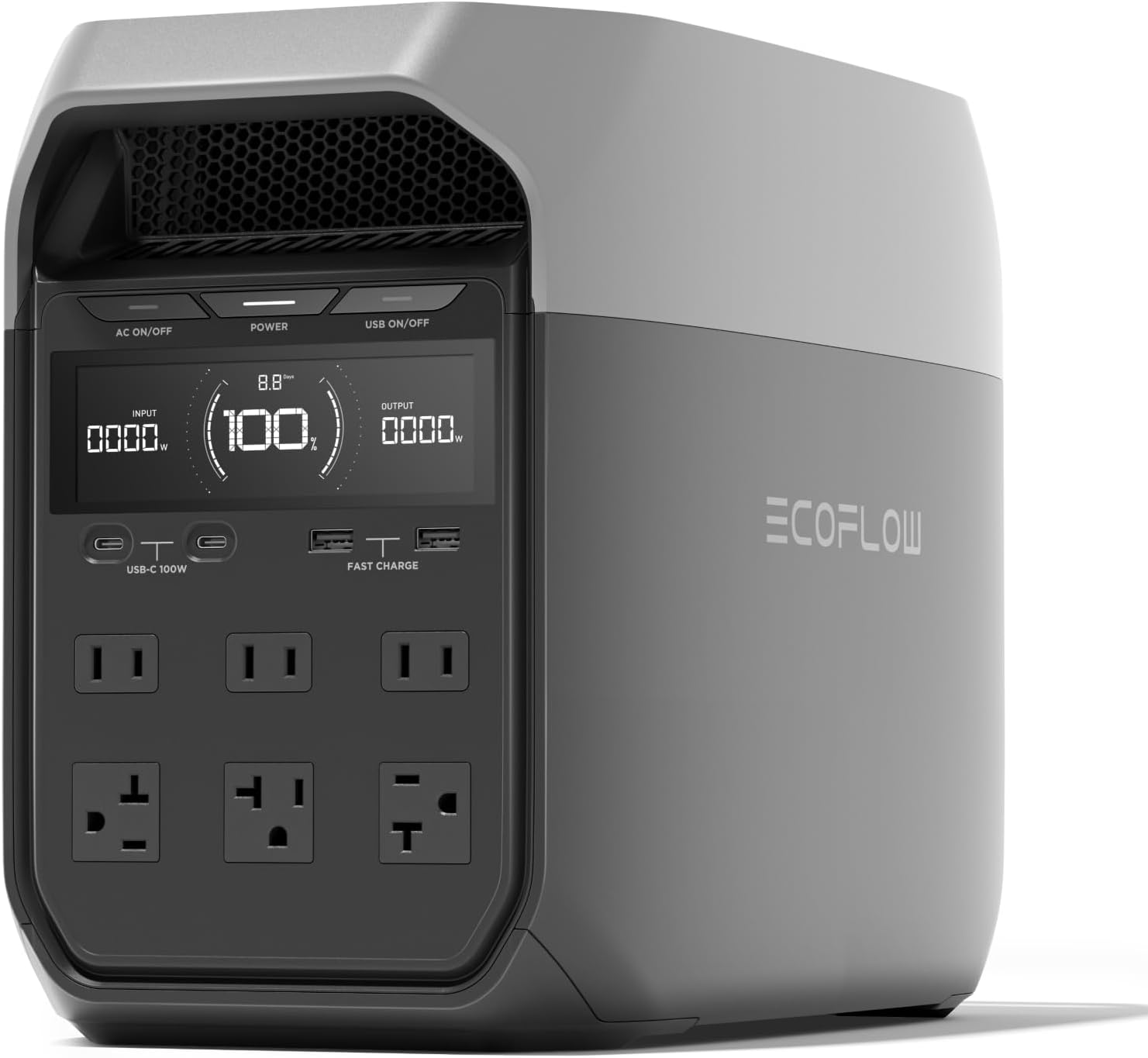
Shortlist the EcoFlow DELTA 3 when the documented combination of 1024 Wh capacity and 1800 W AC output fits a planned portable-power arrangement. These two numbers answer different questions: capacity concerns stored energy, while output concerns the load the unit is specified to supply. The official DELTA 3 page also documents expansion options, multiple recharging methods and a five-year warranty. Those features make this a system-planning decision rather than simply a contest between large wattage labels.
The base DELTA 3 must remain distinct from extra-battery and solar-panel bundles on the same page. A listing for one power station does not automatically include the equipment shown in every package. Choose the exact configuration before evaluating the total purchase.
Who It Suits
Buy it if
Consider the base unit if you have identified the equipment to power and can compare its requirements against 1800 W AC output and 1024 Wh capacity. It is also worth considering if an expansion path is part of a defined plan: EcoFlow names compatible extra-battery families rather than leaving expansion as an unspecified possibility.
The recharging choices matter if your routine changes between mains access, a vehicle and a solar arrangement. Their value depends on whether the necessary compatible equipment will actually be available. A buyer with only one intended charging location should evaluate that location first instead of paying attention to every possible system accessory.
Skip it if
Skip a purchase based solely on the larger X-Boost or surge numbers. If your appliance needs an operating condition outside the documented ordinary output, establish exact compatibility before ordering. Likewise, do not select the base package when your plan depends on an extra battery, alternator charger or solar panel being included. Those are configuration decisions to resolve separately.
Documented Specifications
| Documented fact |
Why it matters |
| Base DELTA 3 capacity: 1024 Wh |
Identifies the base unit's energy specification rather than the combined capacity of a bundle. |
| AC output: 1800 W |
Provides the ordinary output figure for load planning. |
| X-Boost: 2200 W; surge: 3600 W |
These labelled modes must not replace the ordinary output figure in comparisons. |
| UPS claim: less than 10 ms |
Supplies a switching-time claim, not a guarantee for every attached device. |
| Expansion described as 1-5 kWh |
Relevant when planning compatible extra-battery equipment. |
| Five recharging methods listed |
Makes the intended charging equipment part of the system decision. |
| Five-year warranty |
Establishes an advertised duration while leaving coverage conditions to the applicable terms. |
The table describes the base DELTA 3 except where expansion and operating modes are explicitly identified. It does not combine capacity from several power stations or transfer an accessory's rating to the base unit.
Decision Analysis
Begin with a load list, not an advertised maximum. Identify which devices would operate together and check their documented requirements. Keep 1800 W AC output separate from 1024 Wh capacity: a load can fit one requirement and still be unsuitable for your intended operating time. This article does not calculate runtime from nominal capacity because that would require assumptions about the connected equipment and operating losses.
The X-Boost and surge labels deserve particular care. EcoFlow presents 2200 W with X-Boost and a 3600 W surge figure alongside the ordinary 1800 W AC rating. Those labels describe different conditions, so they should remain separate in a buying comparison. A shopper who needs a particular appliance to start or operate should ask for exact compatibility guidance rather than interpret the largest number as continuous output for arbitrary equipment.
Expansion changes the energy plan, but it also changes the package. EcoFlow names DELTA 3 Extra Battery, DELTA Pro 3 Extra Battery, DELTA 2 Extra Battery and DELTA 2 Max Extra Battery in its expansion statement. That is useful specificity. However, the named options do not establish that an extra battery is supplied with the base listing or that every conceivable combination produces the maximum advertised system capacity. Confirm the proposed combination and its connection requirements before treating expansion as a future certainty.
Recharging deserves an equally practical check. The page lists AC, solar, an 800 W Alternator Charger, Smart Generator 3000 Dual Fuel and multicharging as five methods. This describes supported approaches, not five accessories in the box. If vehicle charging is central to the plan, resolve the exact charging equipment and installation requirements. If solar is central, match the actual panel arrangement to the station's documented input requirements rather than infer compatibility from a connector photograph.
The less-than-10-ms UPS claim is relevant to a backup workflow, but it is not an uninterrupted-operation guarantee for every device. Check the equipment manufacturer's requirements and confirm whether the proposed arrangement is supported. A short switching-time specification alone should not be stretched into a claim of suitability for a critical application.
Comparison Context
Compare this base DELTA 3 with other power stations using base capacity, ordinary AC output and the exact recharge arrangement you intend to use. Keep bundled panels, extra batteries and separate chargers in separate budget lines. Otherwise, one complete package can appear equivalent to a bare unit when it is not.
The FitzPort product catalogue can help locate other power products, but each needs its own configuration check. The decision here is not that expansion is universally better. It is whether a documented expansion route solves a requirement you have already identified, at an acceptable complete-system cost.
Ownership and Setup Checks
Check the exact Amazon listing for the DELTA 3 name, selected package, seller, included equipment and return eligibility. Do not substitute DELTA 3 Plus specifications or assume an accessory shown elsewhere on the manufacturer page comes with this ASIN. Verify compatibility for the intended loads and charging equipment before purchase.
Ongoing Costs and Warranty
Budget according to the actual recharging method and any separately purchased expansion equipment; this article does not invent electricity tariffs, fuel expenditure or accessory prices. EcoFlow advertises a five-year warranty for this product. Check the applicable regional terms, seller eligibility, exclusions and claim procedure before relying on that duration. A warranty period is not a promise of a particular battery lifetime or cost-free replacement in every circumstance.
Limitations and Checks
The evidence used here does not justify a runtime promise, universal appliance compatibility or a measured charging result. Other products and bundles appear on the official page, so their panel efficiency, weather rating and delivery claims are not assigned to the base power station. In particular, no solar-panel IP rating is presented as the DELTA 3's enclosure rating.
Verdict
Choose the DELTA 3 if 1024 Wh capacity, 1800 W ordinary AC output and the documented charging or expansion routes match a carefully specified plan. Pause when the purchase depends on an unverified load or assumed bundle inclusion. As an Amazon Associate, FitzPort Shop earns from qualifying purchases.
 Trending Editor's Pick